
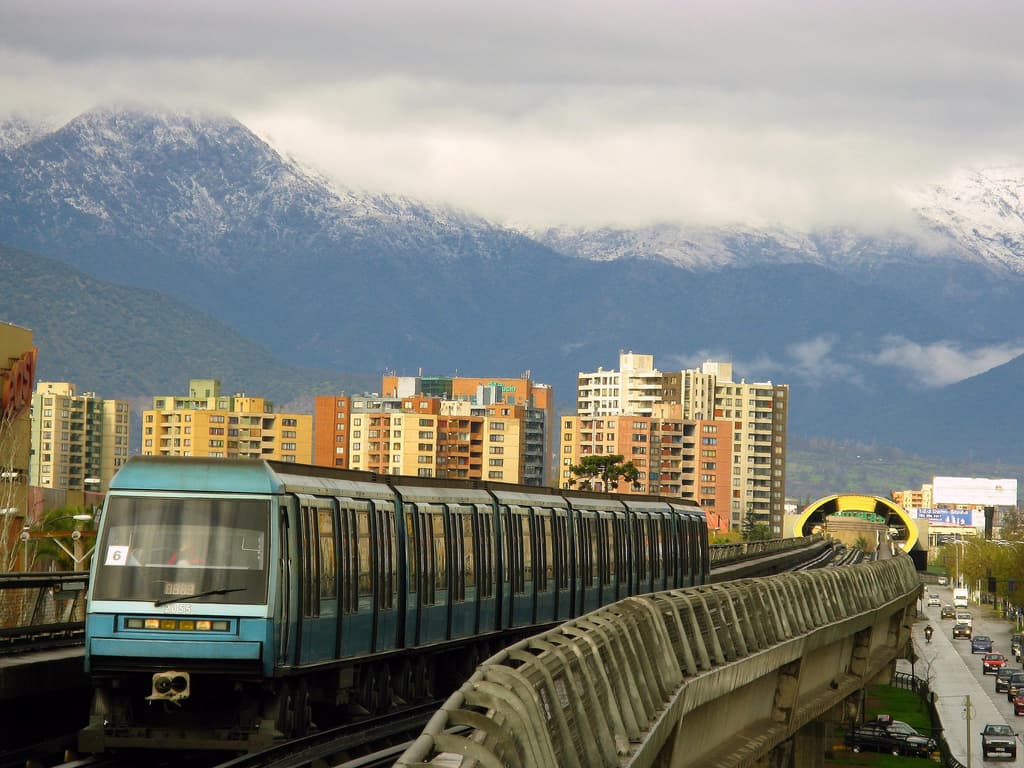

- Lines
- Multiple lines serving Santiago
- Operating Hours
- 06:00 to 23:00
- Student Fare
- CLP 260 all day
- Senior Fare
- CLP 390 all day
How to Buy and Top Up a Bip! Card
Navigating Santiago's public transport starts with acquiring a Bip! card. This essential piece of plastic costs CLP 1,550 for an anonymous card and can be purchased at any Metro station ticket office or authorised retail outlets. Once you've secured your card, you're ready to top it up and start exploring the city.
The minimum top-up amount is CLP 750, and you can refill your card at Metro station ticket offices, Bip! totems, or through the Bip!QR app. However, a common pitfall is forgetting to validate online top-ups at a totem before taking your next ride. This oversight can leave you stranded at the turnstile.
Digital Solutions
For those who prefer going paperless, the Bip!QR app allows you to create a virtual account and use a QR code to access buses, the Metro, and the MetroTren. Be warned, though, the app can be a bit temperamental, leading to delays or double charges. If you're using an iPhone, you'll need a totem or an Android NFC device to validate your card, as the iPhone's NFC capabilities are limited in this context.
Remember, the emergency ride feature is only available on buses, so always ensure your card is topped up for Metro and MetroTren journeys. For more tips on navigating Santiago's public transport system, visit our Getting Around Santiago guide.
What Are the Fares for Santiago Metro?
Navigating the fare structure of the Santiago Metro is straightforward once you know the basics. The fares vary based on the time of day, with three distinct pricing tiers: low, valley, and peak hours. During low hours, you'll pay CLP 735. Valley hours bump the fare up to CLP 815, and during the busiest peak hours, it rises to CLP 895.
If you're taking the bus, the fare is a flat CLP 795, which aligns with similar time-based levels as the Metro. Integration between buses and the Metro ensures that your journey remains cost-effective, allowing you to switch between modes smoothly within a set period.
For students, the fare is consistently CLP 260, whether you're on the Metro or the bus. This reduced fare is applicable throughout the day, making it an economical choice for daily commutes. Seniors also benefit from a reduced fare, paying CLP 390 at any time on the Metro.
One thing to watch out for is forgetting to validate online top-ups on your Bip! card, which is a common hiccup for new users. Additionally, those using the QR app should be aware of potential instability, which can lead to app crashes or even double charges. If you're an iPhone user, remember that NFC validation might not work as expected, requiring you to use a totem or an Android device instead.
Metro Operating Hours
- Weekdays
- 06:00 to 23:00
- Saturday
- 06:30 to 23:00
- Sunday & holidays
- 07:30 to 23:00
How Does Fare Integration Work?
Navigating Santiago's public transport system becomes a breeze once you understand fare integration. With a single Bip! card, you can seamlessly transfer between buses, the Metro, and MetroTren Nos. This integration allows for up to two transfers within a 120-minute window, making your journey efficient and cost-effective.
Transfers and Time Limits
The key to making the most of this system is timing. Once you swipe your Bip! card for the first time, the clock starts ticking on your 120-minute transfer window. Within this period, you can switch between modes of transport,bus, Metro, or MetroTren Nos,without incurring extra charges beyond the fixed integrated fare. This means you can hop from a bus to the Metro and finish your journey on MetroTren Nos, all under one fare umbrella.
Practical Tips for Seamless Travel
- Validate Top-ups: Always ensure your online top-ups are validated, as forgetting can disrupt your travel.
- App Hiccups: The QR app is handy but can be temperamental. Be prepared for crashes or double charges.
- iPhone Limitations: If you're an iPhone user, note that NFC validation doesn't work. You'll need an Android device or a totem to complete the process.
Understanding these elements can save you time and hassle, ensuring a smooth travel experience across Santiago's public transport network.
Major Metro Lines and Interchanges
The Santiago Metro is a sprawling network that connects various parts of the city, making it an essential part of daily life for many residents and visitors. Understanding the major lines and key interchanges can help you navigate the system more efficiently.
Key Metro Lines
Line 1 (Red Line): This is the oldest and busiest line, running east to west through the city. It connects key areas such as Los Dominicos and Pajaritos, and includes major stops like Baquedano, where you can switch to Line 5, and Universidad de Chile, a bustling hub for students and commuters.
Line 2 (Yellow Line): Running north to south, this line links La Cisterna to Vespucio Norte. It's particularly useful if you're heading to the central areas, with interchange opportunities at stations like Los Héroes, where you can switch to Line 1.
Line 5 (Green Line): Connecting Maipú to Plaza de Maipú, this line is vital for accessing the western parts of Santiago. Interchanges at stations like Santa Ana and Baquedano allow for easy transfers to other lines.
Line 6 (Purple Line): A newer addition to the network, Line 6 offers a cross-city route from Cerrillos to Los Leones. It features modern trains and connects with Line 1 at Los Leones.
Key Interchange Stations
Los Héroes: An important interchange between Line 1 and Line 2. It's a common transfer point for those traveling between the north-south and east-west routes.
Santa Ana: Connects Line 2 and Line 5, making it a strategic point for reaching various city sectors.
Understanding these lines and interchanges will help you plan your journey more effectively, avoiding unnecessary detours and making the most of Santiago's extensive metro system.
Frequently Asked Questions
To use your Bip! card on the Metro, simply tap it on the card reader at the entrance of the station. Make sure you have enough balance on your card before entering.
Yes, you can use your phone to pay for Metro rides through the official Metro app, but be aware that the app can sometimes be unstable, leading to delays or double charges.
If your Bip! card runs out of balance, you need to top it up at a Metro station or a nearby convenience store before you can continue your ride.
Discounted fares are available for students, seniors, and people with disabilities. You will need to apply for the appropriate card to access these discounts.
If you forget to validate an online top-up, your balance won't update, and you may find yourself unable to use the Metro until it's validated at a totem or ticket machine.
The emergency ride feature only applies to buses, not the Metro or MetroTren. Make sure your Bip! card has sufficient balance for Metro rides.